


Review
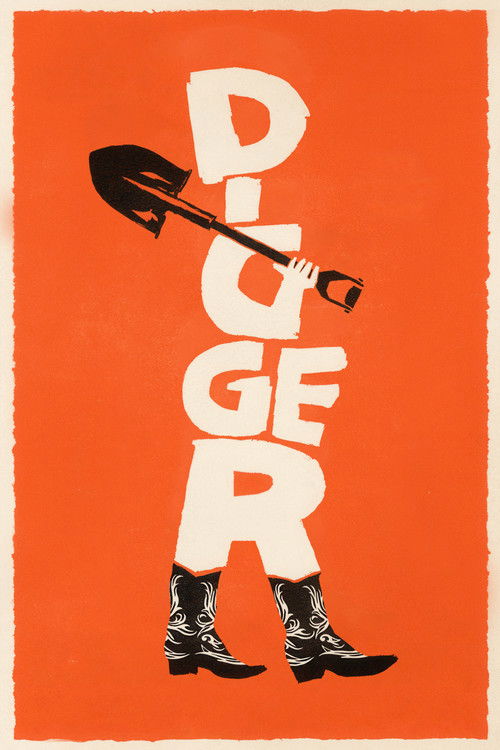
Aging oil baron Digger Rockwell (Tom Cruise) greets the morning as usual: covered in urine from his elderly cat, Maggie. His on-demand vet gives her anywhere from two weeks to 5 minutes left to live. As Digger spars with him over her treatment, an urgent call from his Greenland drilling operation interrupts them. It's a frantic warning about methane fissures erupting around the compound, and Digger dismisses it, as he has many times before. The oil must flow, after all, and there's no need to blow things up over a bit of gas. Minutes later, panicked Environmental Safety Chief Dr. Nirav Ganesh (Riz Ahmed) reports that a fissure has, in fact, blown up, sending a Maryland-sized chunk of ice on a collision course with northern Europe. With catastrophe imminent, a crisis team led by Digger and U.S. President Compson (John Goodman) has mere hours to figure out how to avert calamity–or at least control the narrative.
Digger, the 8th film from Mexican provocateur Alejandro González Iñárritu, is a self-aware meta-satire about climate change and art that knows you know it's self-aware. It knows you've seen similar "message" movies before, and it anticipates how you'll feel about this one. If that sounds vague (or annoying), it's because the film's marketing has been coy about its matryoshka-doll story structure. Digger may be the year's most ambitious movie, and revealing the first twist in the marketing might have helped its dismal box office. As it stands, the film surpasses expectations in its craft (performances, production design, sound design, etc.), but the screenplay cares more about being clever than insightful.
Tom Cruise delivers the wildest performance of his career, playing Digger as a cartoonishly appropriate chimera of Foghorn Leghorn and The Rich Texan from The Simpsons. Full-body prosthetics completely subsume Cruise, but they can't contain the copious charisma and sleaziness that ooze through as Digger smooth-talks every obstacle in his path into an opportunity. This is in full effect during the film's centerpiece scene: Digger delivers a monologue worthy of Colonel Jessup or Gordon Gekko to a United Nations stand-in, staged like a musical number as Cruise twirls around the court, weaving in and out of the assembled delegates' sneers.
John Goodman's President Compson is a fiery blowhard whose body and mind are steadily deteriorating, and Digger holds the corrupt politician as close as his beloved, similarly ailing Maggie the cat. Riz Ahmed's Nirav and Sophie Wilde's Hannah go toe-to-toe with Cruise's outsized performance. Nirav is the story's conscience, and Hannah is an exhausted collaborator, both of them unafraid to stand up to him. Sandra Huller is underutilized, but matches Digger's intensity (or at least his decibel levels) as his half-sister, who owns an eco-friendly startup completely at odds with his oil business.
Dennis Gassner and Richard L. Johnson's production design is lavish, dense, and beautiful. Digger's massive mansion still feels claustrophobic, filled with what feels like a taxidermy mount of every animal on Earth. His whole estate is a surreal riff on Charles Foster Kane's Xanadu, with a sprawling, cluttered aesthetic that feels otherworldly and impossibly picturesque. Johnnie Burn and Richard King's sound design heightens the world's sense of reality: unnaturally loud and ever-present, it never lets the characters or the audience relax (which will annoy some viewers).
The screenplay has some tricks up its sleeve that enhance and complicate these elements, though not always for the better. The story is more high-concept than it seems at first, and its satire's initial scope as a modern-day Dr. Strangelove swapping nuclear war for climate change widens to include the very concept of satire and art's relationship to power (including the film itself). At first blush, it's a compelling shift in perspective, but the wider scope lacks focus and ultimately feels like smug observations without any interrogation: a cinematic version of the We Should Improve Society meme. One scene between Nirav and Digger on a plane actually has a point of view and successfully indicts Nirav and the audience, but the rest shrugs through its casual nihilism.
Nihilism isn't inherently a problem for a satire, but not being funny is. Plenty of jokes run throughout, delivered through constant yelling and other over-the-top methods that all land with a thud. Most are either too obvious or too corny, and while there's an argument that this is intentional once the film reveals its true intentions, if that's true, it's a cop out, yet another problem for a satire. The narrative acrobatics also splinter the characters' arcs in a way that's, once again, clever on paper but muddled in execution.
If Digger's reach exceeds its grasp, Iñárritu's direction is still able to steer it to a coherent finale, just one that feels like a scoff instead of a revelation. Still, its audacity deserves celebration, despite the film's own assertions to the contrary. It's refreshing to see a major studio empower an auteur director, and exciting to remember that Tom Cruise has Magnolia in his portfolio and not just Mission: Impossible. This massive swing from Iñárritu may not be a home run, but as Digger Rockwell himself would agree, sometimes a triple is just as worthy.