

Going In
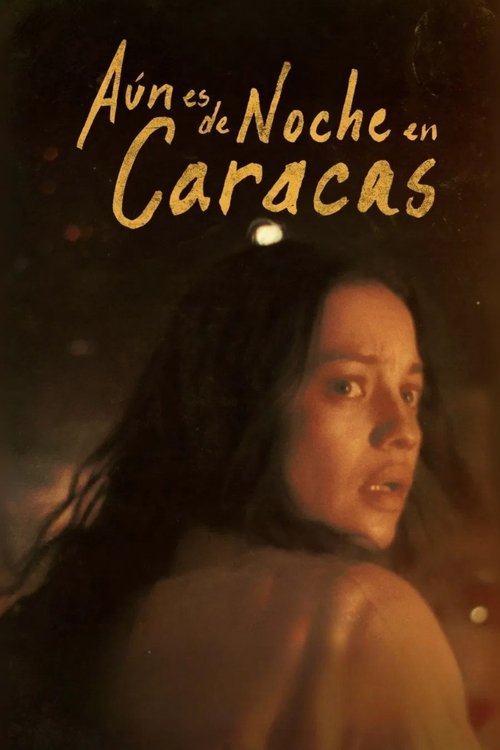
Mariana Rondón and Marité Ugás have collaborated on several acclaimed and controversial political films, including Postcards from Leningrad (an autobiographical piece for Rondón, whose parents were FALN guerrillas) and Bad Hair (a queer coming-of-age story set at the end of Hugo Chávez's presidency). Their latest dramatic thriller, It Would Be Night In Caracas, circulated the festival circuit last year and earned critical acclaim, including an Audience Choice Award from the Chicago Latino Film Festival earlier this year. All of this promised a home run for my upcoming screening until I checked the audience reaction on Letterboxd just before it.
Set during the 2017 Venezuelan protests, the movie received mostly negative or dismissive reviews on the site, especially among Latin American reviewers. Many felt the movie sensationalized Venezuelan pain for "gringo" audiences. Others lambasted its failure to engage with the protests' politics, unlike the directors' previous films and their respective conflicts. One (very long) review even accused the movie of being part of a larger propaganda conspiracy by Venezuelan elites to whitewash the abuses that occurred there.
Political movies will always be controversial, especially among those who lived through the events depicted. Even so, the gap between the critical and audience responses raised compelling questions. Can you make a "political movie without the politics" (paraphrased from one reviewer)? Which is more important in a movie that fictionalizes real-life events, veracity or an engaging narrative? Must one always come at the expense of the other?
Review
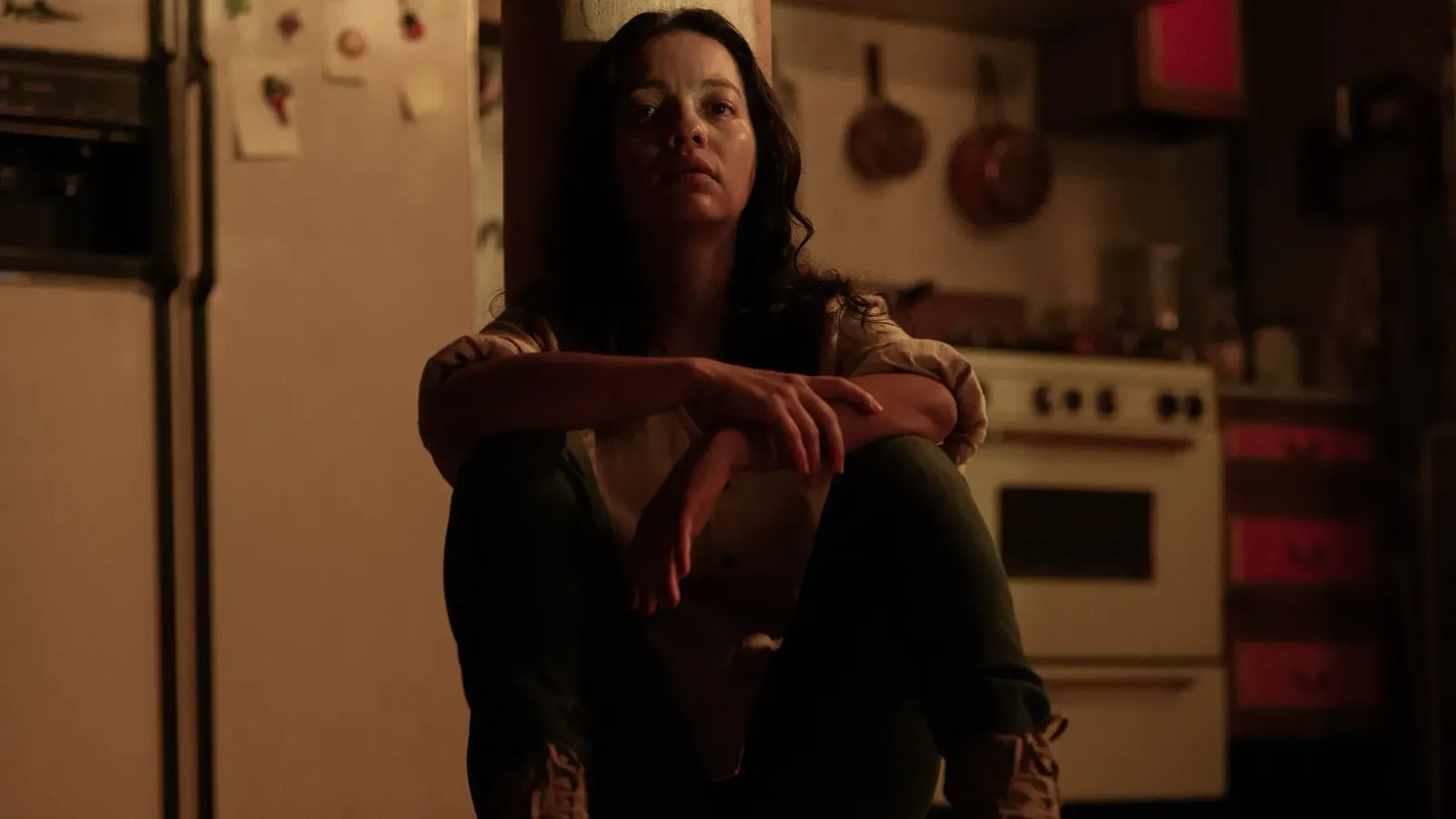
Adelaida (Natalia Reyes) has just buried her mother, and barely registers the clashes of protesters and government forces around her. Her grief hangs heavy as she spends her days negotiating for basic living necessities or lost in memories and keepsakes of her mother. Her neighbors offer what sympathy they can, but they're in their own state of disarray, weighing whether it's worth staying in Caracas as the protests intensify. None more so than her childhood friend Aurora (Blanca Vanessa Núñez), a Spanish immigrant who's never really felt welcome in Venezuela anyway.
One day, Adelaida comes home to find her apartment commandeered by a local women's militia. Their brutal commander, Mariscala (Sheila Monterola), tells her that everything she owns now belongs to the struggle, a threat that almost feels like a taunt. Adelaida tries turning to Aurora for help, only to find her dead of a heart attack. Aurora's phone is buzzing with frantic messages from her family, trying to confirm she's received the money and tickets they've sent to help her flee the country. Lacking options or resources, Adelaida takes over her late friend's apartment and phone. This marks the first in a series of escalating dilemmas where she'll have to decide what's more important, her identity or her survival.
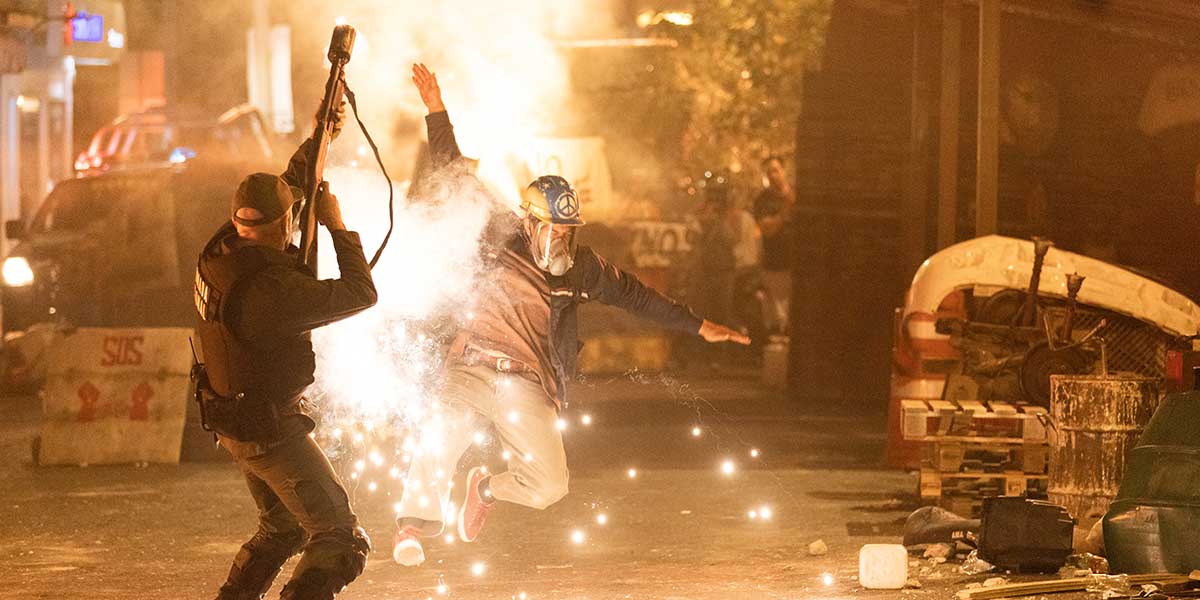
It Would Be Night in Caracas is primarily an immersive thriller. The cinematography and sound design pull you into the isolation of Adelaida's world, whether she's hiding in her apartment or out in the city, one face in a sea of people all trying to find a way out. This claustrophobia and anxiety are compounded by the ever-present threat of violence between the revolutionaries and the government. The most exciting sequence is when she tries to escape her hideout just as her neighborhood descends into a warzone. The camera never loses Adelaida during the chaos, and the fear and disorientation feel like a scene from a war movie (I was specifically reminded of Alex Garland's Warfare).
Because the film prioritizes immersion over narrative, Adelaida's journey can feel like a slow burn, but it's built on ethical dilemmas that should tantalize viewers willing to go along for the ride. Are you willing to betray a friend's memory? Is your personal identity more important than your national one? Natalia Reyes anchors it all with an incredible performance as Adelaida discovers what she's willing to compromise to escape, and the quiet spiritual deaths that can accompany the bloody ones.
This experiential approach is where the film starts to reveal its limitations. Flashbacks to Adelaida's childhood are sprinkled throughout as beautiful, Terrence Malick-like poetic vignettes, but awkward editing makes them feel like fragments from a different movie. Maybe this is the intention, since anyone in Adelaida's situation is going to have intrusive thoughts. Regardless, the commitment to immersion leads us to the film's biggest weakness and the political elephant in the room.
The filmmakers assume you are familiar with the 2017 protests. The protests serve as a backdrop to Adelaida's story, not the focus, and the film offers no hand-holding to bring unfamiliar viewers up to speed. If we are meant to experience Adelaida's emotional state throughout the movie, it's hard to see how her personal politics matter more than her immediate POV. After all, it's easy to see that the state is acting tyrannically, and the conflicts the story presents aren't about Adelaida's ideology but about her sense of identity.
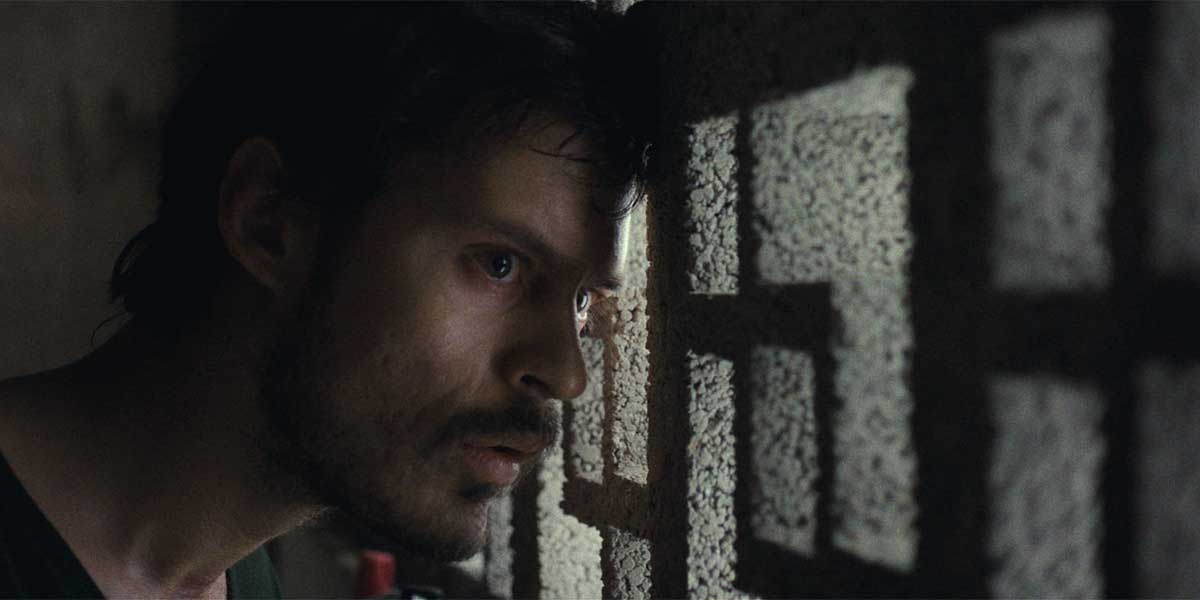
The problem is that the two other supporting characters we're introduced to have stories that directly contend with the politics within and beyond them. Mariscala is a by-all-means-necessary revolutionary who finds herself trapped by patriarchy within a liberation movement. Santiago (Moisés Angola), the brother of Adelaida's friend, ends up hiding with Adelaida, on the run from the paramilitary groups the state coerced him into joining through torture. These stories hint at a powerful interrogation of state terror and how revolutions can devour themselves, but this isn't Adelaida's concern, so none of it is explored. The actors do their best to give Mariscala and Santiago hidden depths, but they still feel extraneous and one-dimensional.
In the end, It Would be Night in Caracas is a well-crafted thriller and a timely story about resilience in the face of state oppression. But its unwillingness to directly engage with that oppression may leave audiences feeling the urgency of the story, if not the weight.
A "political movie without the politics", as it were.
The Afterimage
This movie reminded me of watching A Man Escaped with one of my film clubs. I loved so much about that film's craft, but was unfulfilled by the story because I saw Fontaine's characterization as razor-thin beyond "French Resistance fighter in prison." During the discussion, a fellow club member suggested that maybe there wasn't an effort to give him a backstory because the intended audience of the time, post-WWII France, already knew a Fontaine in their lives, so they didn't need one.
This played out in real life during the audience discussion after my screening. Much of the audience was Venezuelan, and some had lived through the events of the film or still had family there, with one gentleman having lived through his own version in Cuba. They largely found the film more moving than I did, and while I stand by my opinion, my friend's idea of intended audiences echoed in my mind, so I decided to listen to their stories instead of sharing my opinion. I was more interested in learning about their lived experiences than in debating the movie's merits.
One topic that struck me was the lack of catharsis for some who had lived in Venezuela at the time. Catharsis requires appropriate distance, and they felt the film's images were too close to the ones they continue to see of the Trump Administration's draconian immigration policies, particularly ICE's terrorism in our Chicago communities. Many still felt unsafe, and part of that fear was tied to the movie's ending.
Spoiler Warning
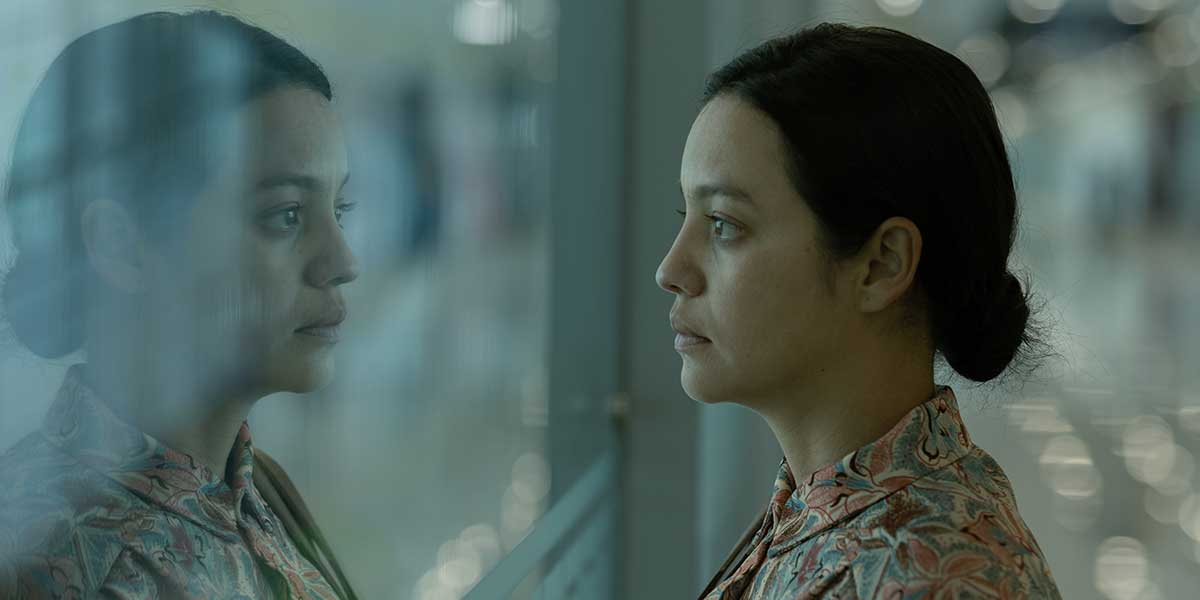
At the end of the movie, Adelaida has fully taken over Aurora's identity, communicating with Aurora's family while securing a flight out of Venezuela. We've watched her glean Aurora's life from diaries and a hacked laptop, and Aurora's family has no idea their daughter is dead. The movie ends with Adelaida on a plane to Spain, leaving us to wonder whether she'll ever tell them.
Completely subsuming your identity in the name of survival is a profound and tragic decision. You have to deny who you are to yourself as much as to others, because you have to truly believe it for the ruse to work. Several audience members volunteered that they knew people who had to do what Adelaida did, or had done it themselves. I'm a child of Salvadoran immigrants, and while the context is different, my family has its own stories of using assumed identities to escape a dangerous homeland.
That is why, even though I still feel that centering Adelaida's POV over the politics weakens the movie overall, I respect it as an artistic choice. Maybe I'm not the intended audience, but many in my screening were, and I was grateful they shared their experiences with me, which made the whole experience worth it.
Projection Booth