


Going In
Like most art forms, films are universal translators, machines that let filmmakers from one walk of life open a dialogue with viewers from any other walk of life. Whether that dialogue is about profound human insights or robots fighting monsters, it works by activating sympathy or empathy in viewers.
When it comes to Jane Schoenbrun's work, this translator somehow misfires for me. I'd be the first to testify that We're All Going to the World's Fair and I Saw the TV Glow both announce the arrival of one of cinema's most exciting new voices. The visual and storytelling craft on display is fresh and dynamic, and it clearly heralds personal stories about their experiences transitioning and their relationships to the media they're attached to. But after each film, I could only see the shape of the deeper stories, and couldn't find a way to feel them.
There are probably life experiences I'm never going to understand, and no one's entitled to a narrative cheat sheet to make others' stories accessible. I just deeply admire Jane's work and wish I could appreciate them more than academically. So when the lights dimmed and the curtain parted at a screening of Teenage Sex and Death at Camp Miasma, all these thoughts and feelings sparked a sincere hope: maybe the third time's the charm.
Review
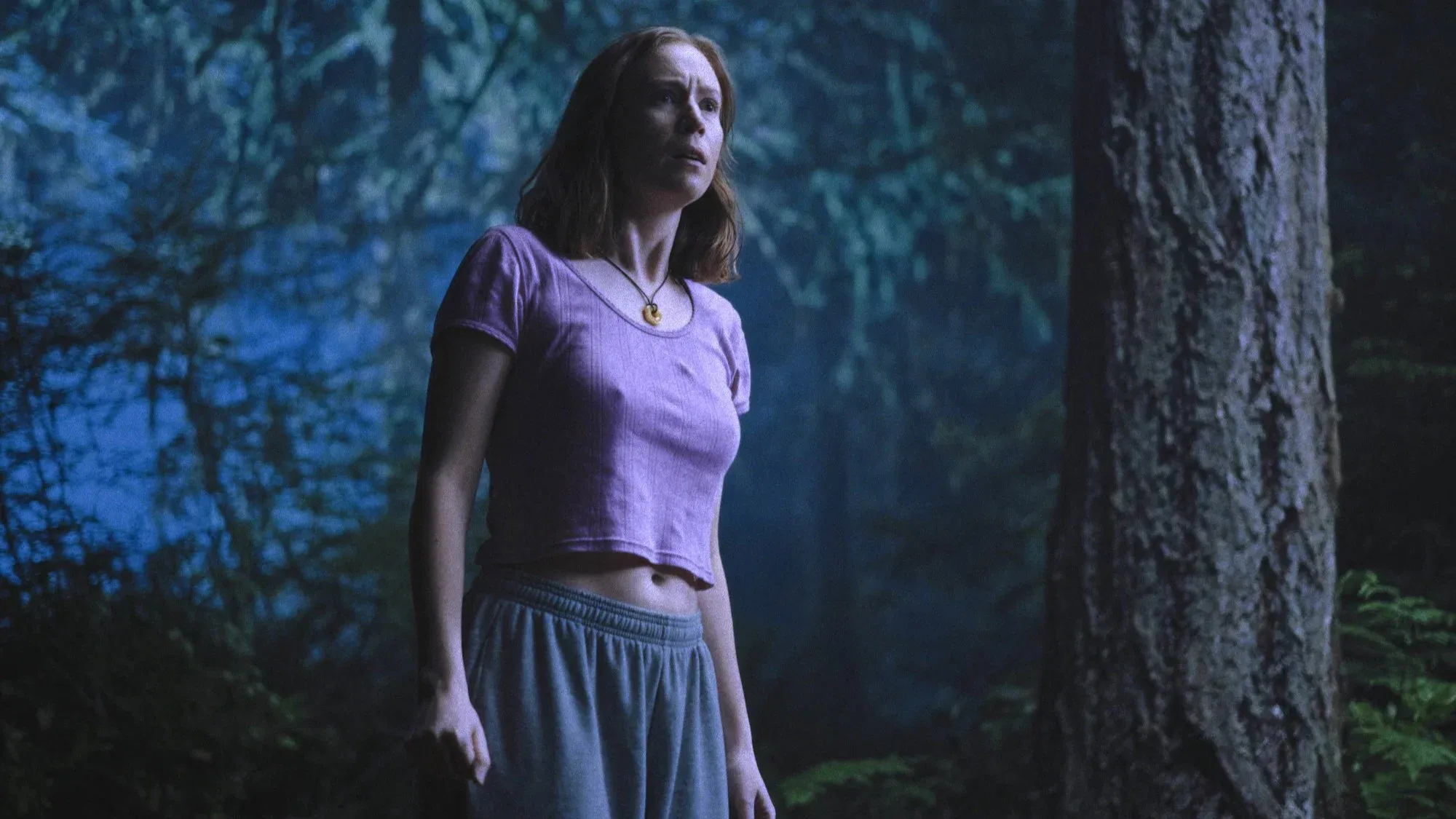
Queer filmmaker Kris Williams (Hannah Einbinder) is tapped to helm a reboot of Camp Miasma, a fictional slasher franchise spiritually adjacent to Friday the 13th and Sleepaway Camp. Freshly anointed as a "Sundance wunderkind," she knows the producers are leveraging her queerness to pinkwash the original series' misogyny and transphobia. But Camp Miasma was formative in Kris' childhood, and she has her own plans for the reboot that hinge on tracking down the reclusive Billy Presley (Gillian Anderson), the "final girl" of the first movie who disappeared from the sequels and later from public life.
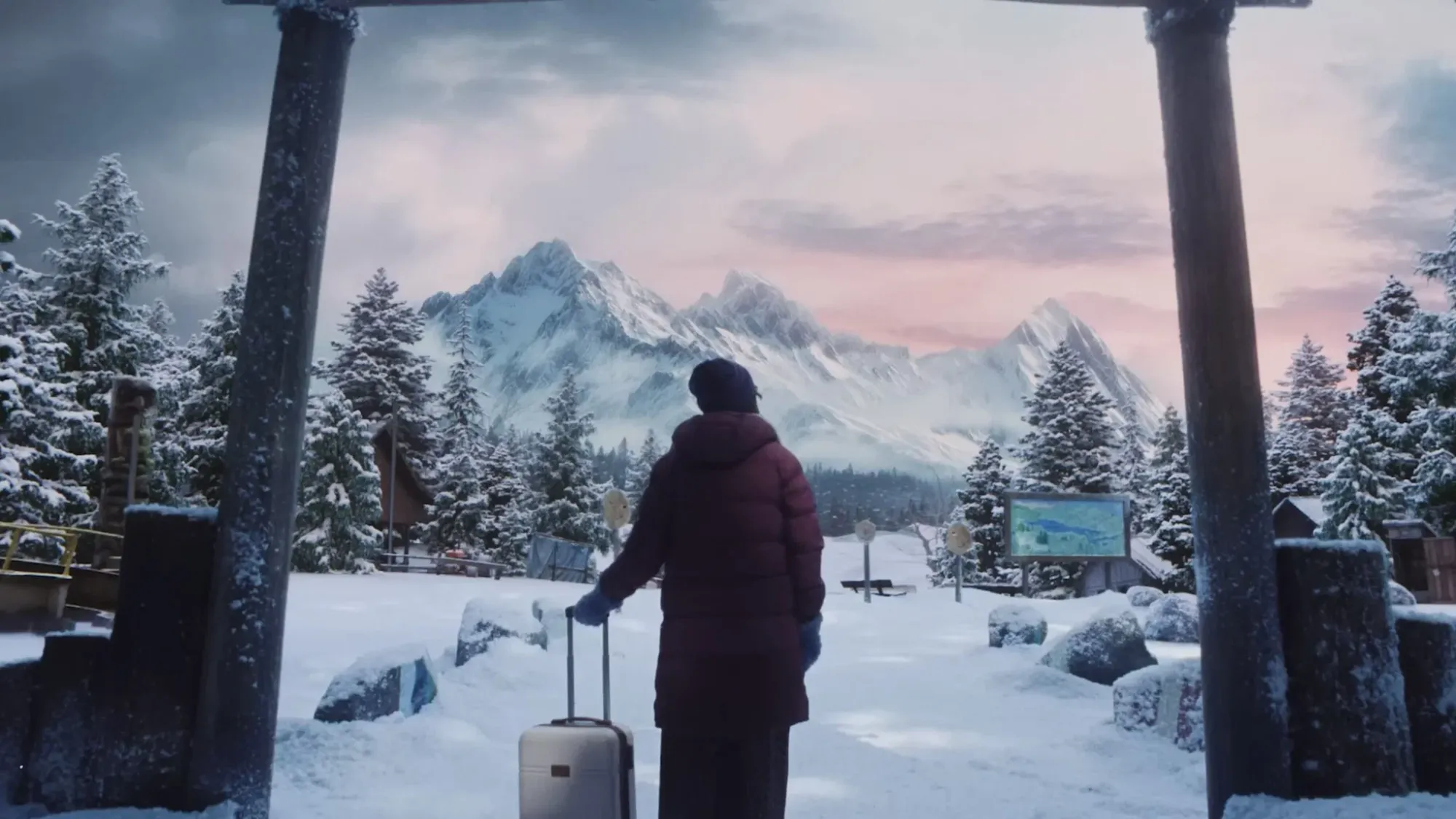
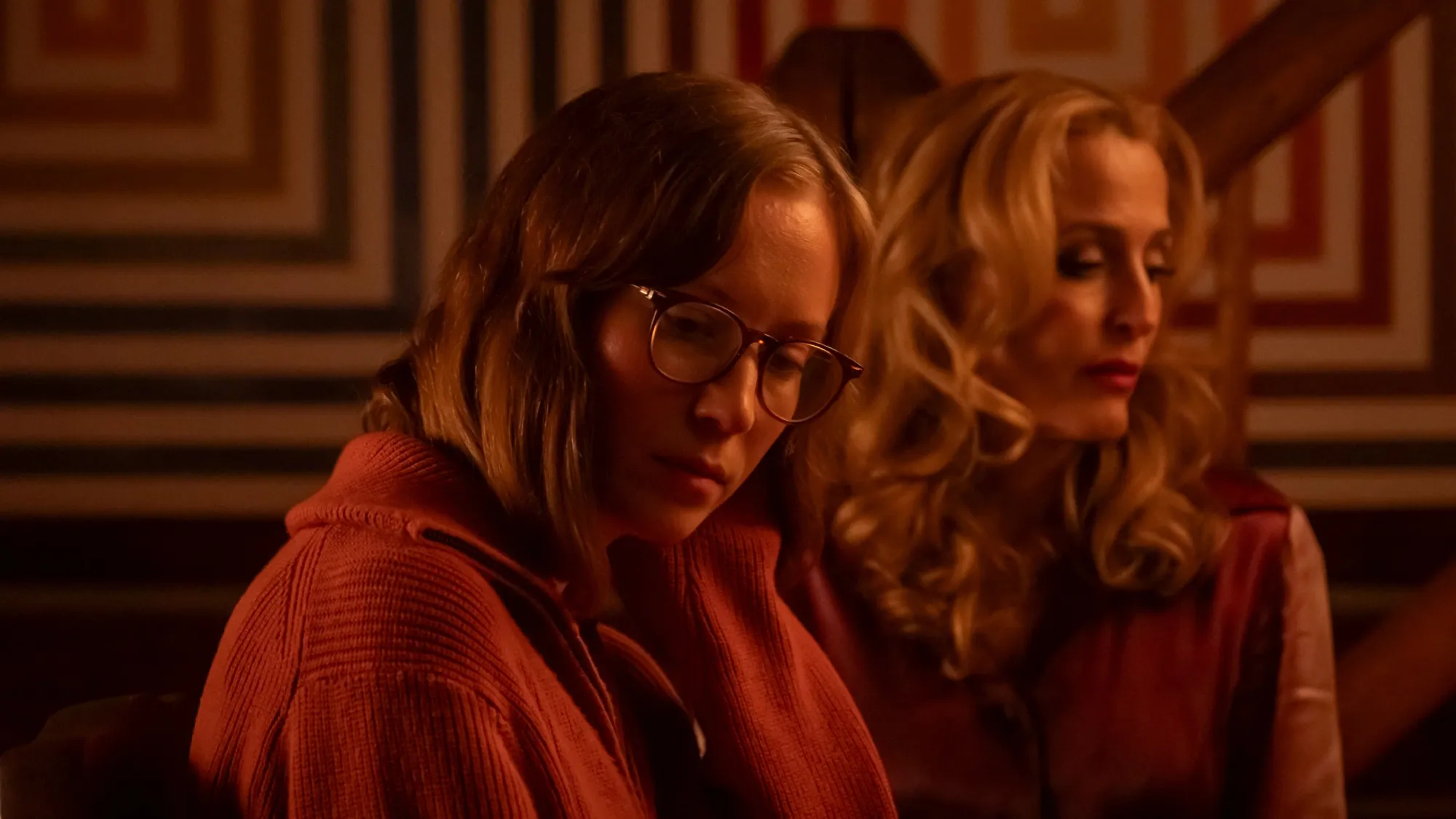
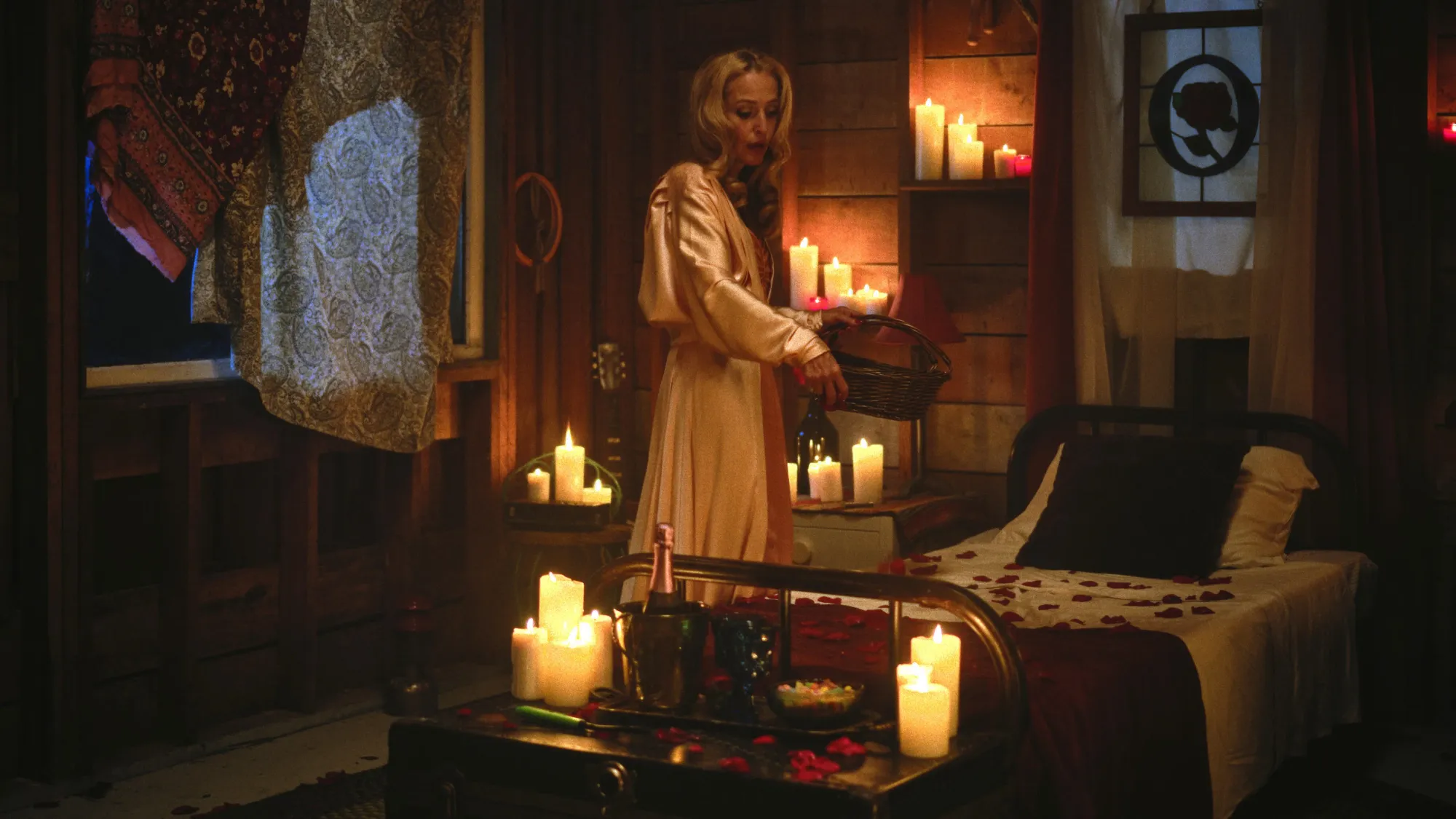
Kris finds her living at the abandoned campsite where Camp Miasma was filmed, living her best Norma Desmond life and strangely preoccupied with the impending return of Little Death, Camp Miasma's killer, as if he's a real boogeyman instead of a celluloid one. Despite her eccentricities, Kris can't help but be captivated. Billy's everything Kris isn't: emotionally open, sensual, and confident, whereas Kris is guarded, self-deprecating, and intellectualizes everything she does. This pushes Kris to reluctantly accept Billy's invitation to stay at the camp, needing her sign-off on the reboot. But it becomes increasingly clear that the camp isn't what it seems, and the dormant secrets of Camp Miasma that Kris will awaken will change her life forever.
Teenage Sex and Death at Camp Miasma is a psychosexual roller-coaster that's both a love letter to slasher films and a surreal sexual awakening. Despite being clothed in the tropes of horror and soaked in gallons of fake blood, this isn't really a scary movie. There are plenty of references scattered about for slasher fans to feast on, but once it gets started, the story never lets you forget that at its core is a vulnerable exploration of sexual shame and learning to let go of it.
Hannah Einbinder embodies Kris as a barely contained, constantly fretting ball of anxiety and apologies. She's uncomfortable in her own skin, much less next to someone else's. "Sex seems so easy for so many people, but I've never been able to get there with someone else unless I'm really far away in my head," she confesses. Einbinder perfectly throttles this repressed desire up and down over the arc of Kris' sexual awakening.
Gillian Anderson's Billy is the opposite, in command of her emotions and exuding an effortless aura of sexuality. This is paired with a wild Southern accent that threatens to lean into parody, but her eyes betray a deep sadness, revealing her performative demeanor is something she's hiding in. Camp Miasma was formative for her too, but in a much darker way, and there's a reason she chose to seclude herself in the abandoned shell of the movie that made her famous.
Together, their chemistry is off the charts. The actors' clash of fire and ice makes for an electrifying erotic odyssey for both women. It may be a sexual awakening for Kris, but Billy has her own emotional catharsis, and it all unfolds literally and metaphorically in Camp Miasma.
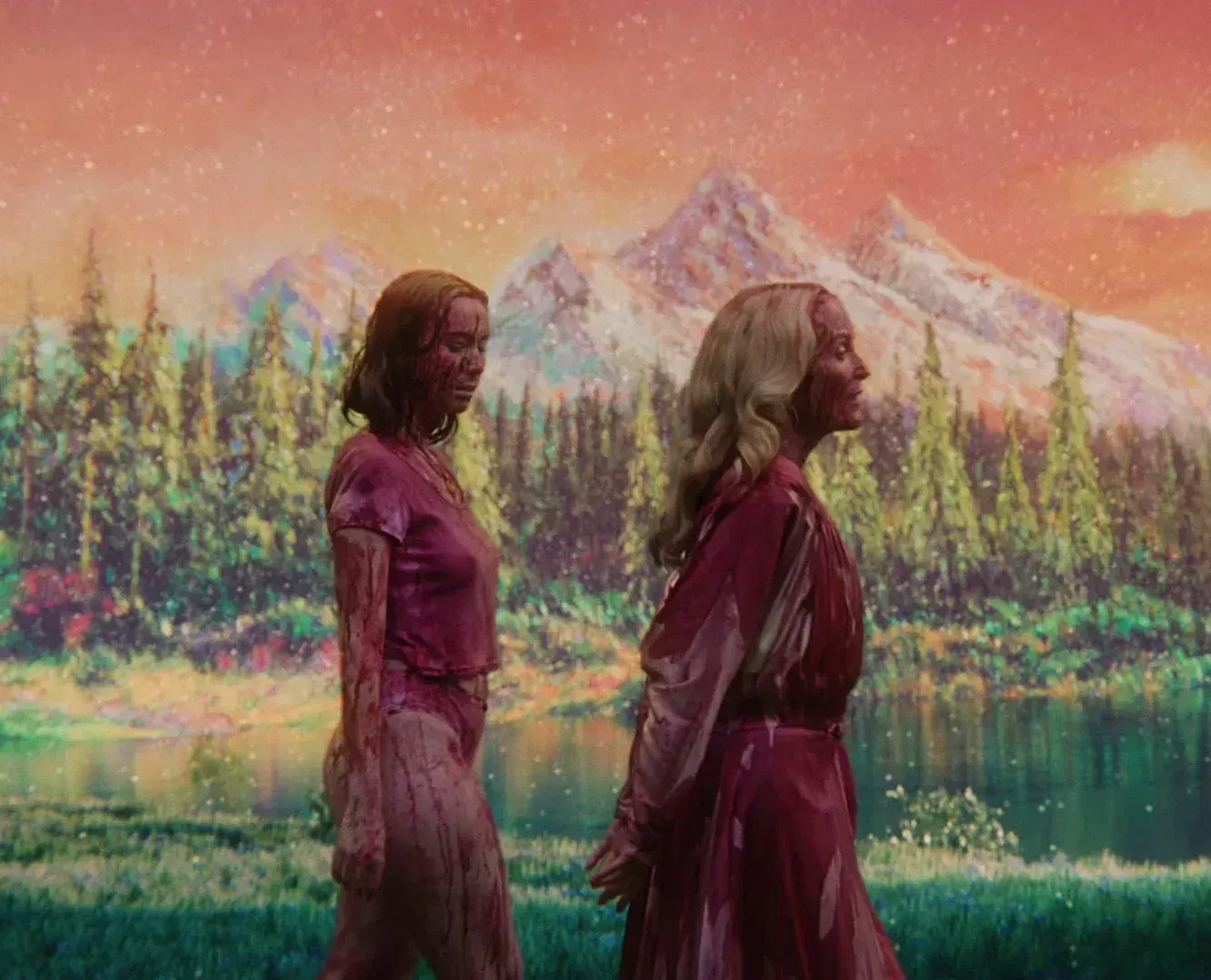
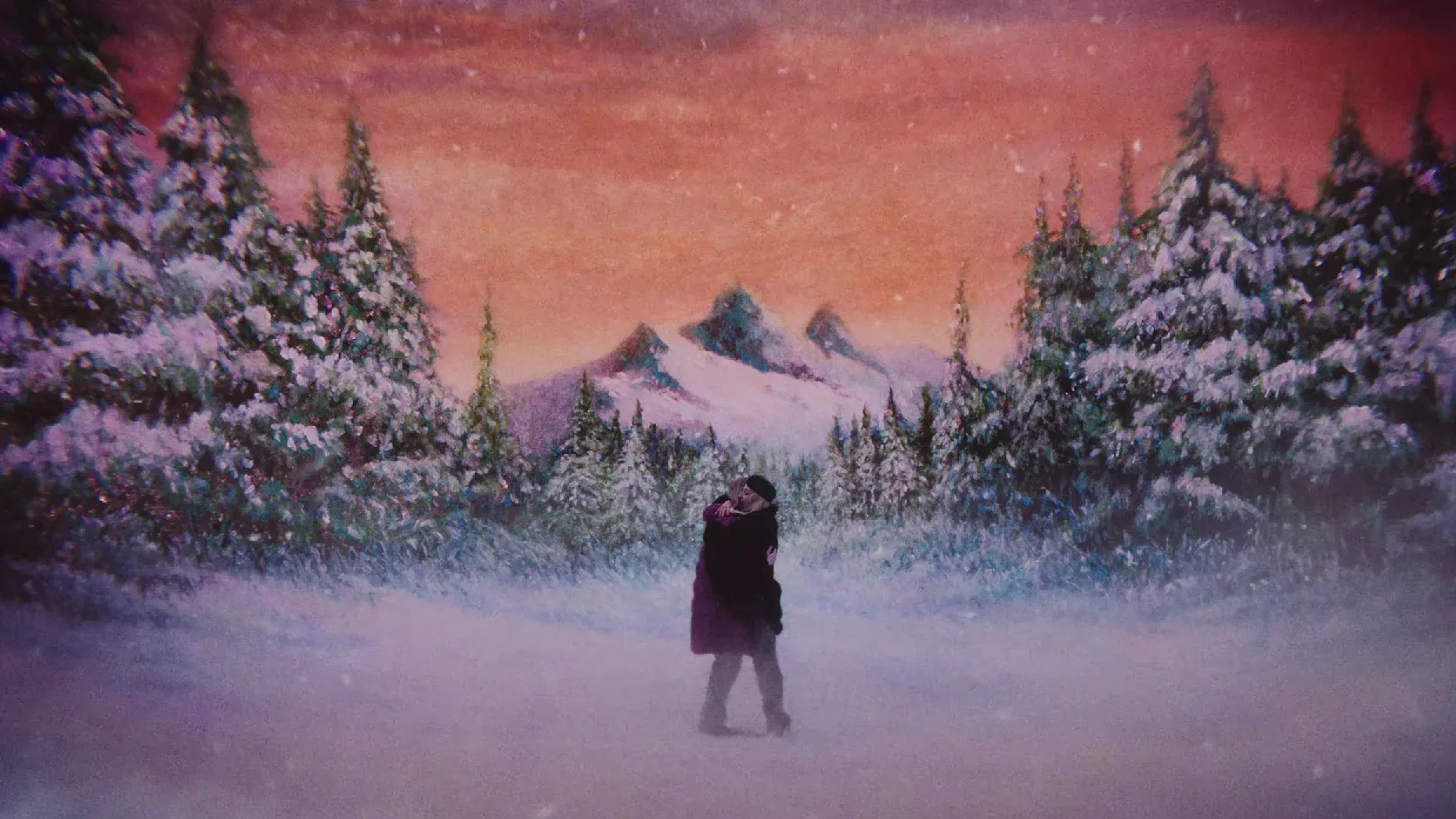
Speaking of the camp, the movie's production design is among the best of the year. Glass matte backdrops and other in-camera tricks make the film feel like an inversion of The Cabinet of Dr. Caligari, trading the shadows and contrasts for candy-colored expressionism. The artificiality supports the shifting psychology of Billy and Kris, whose lives are defined by movie sets. These are empathetic backgrounds, not literal ones; Billy remarks that part of the reason she stays there is that it's like an alternate reality for her.
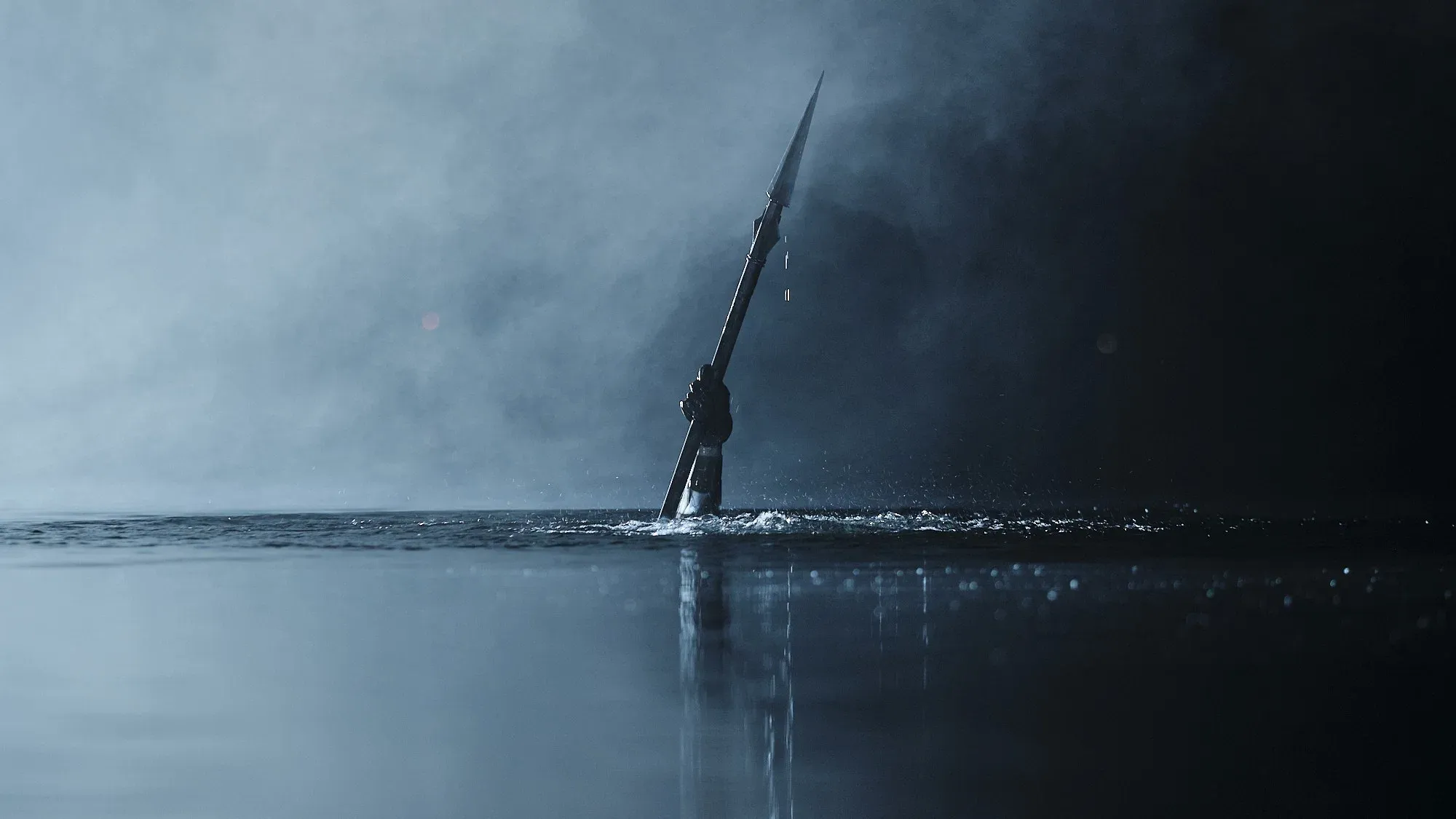
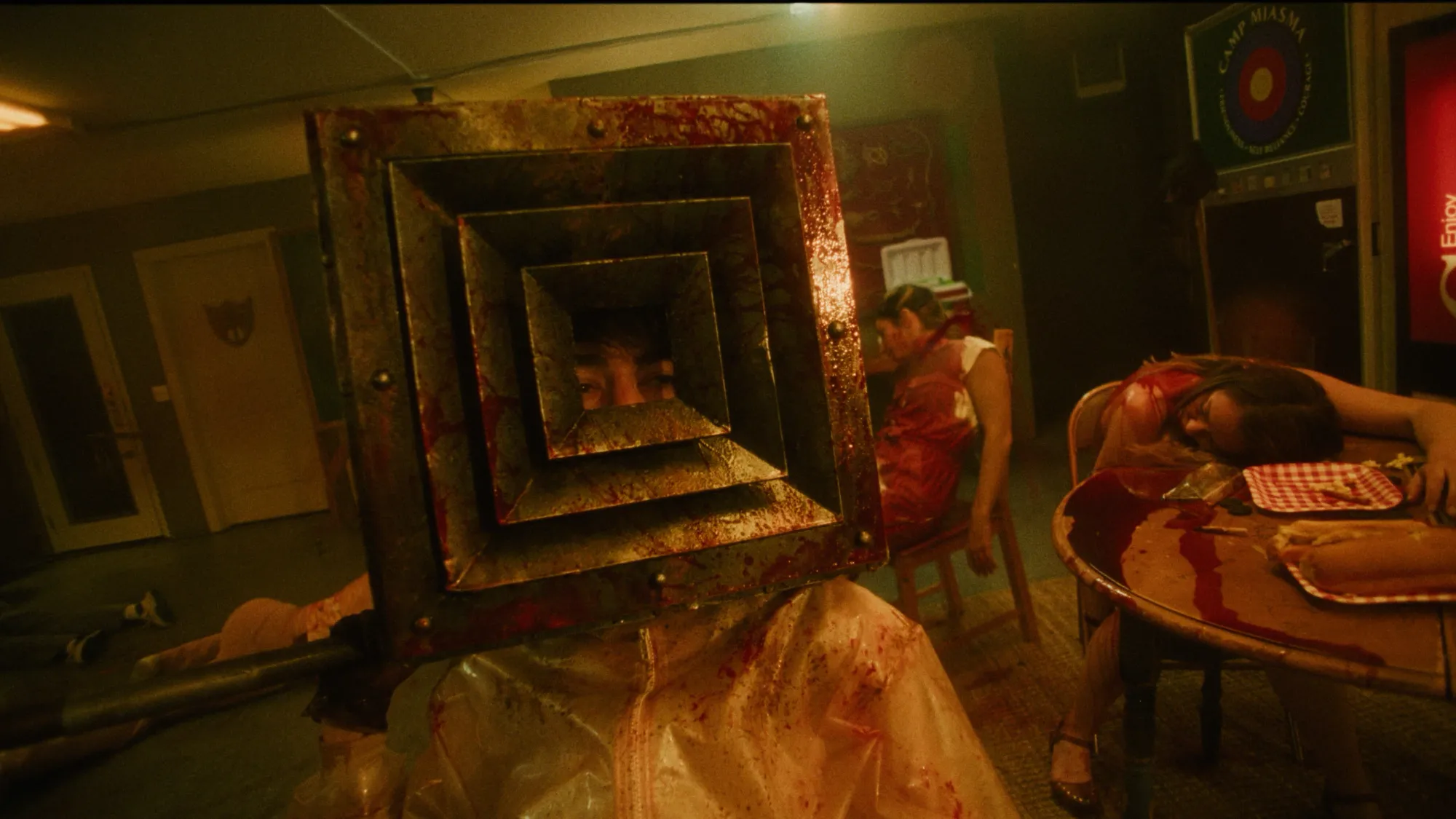
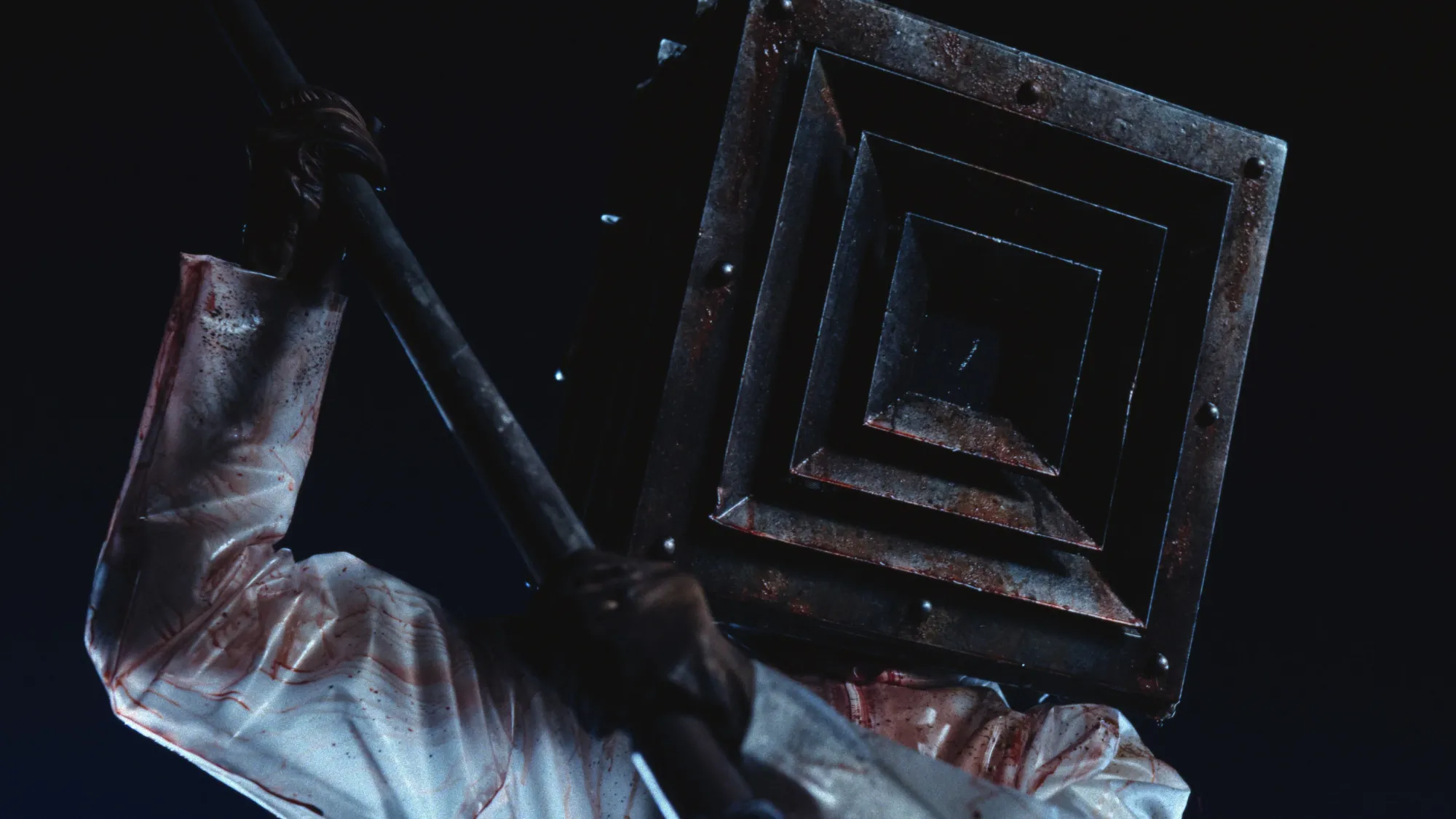
This extends to everything that builds the world of the film-within-the-film itself, including an opening credits sequence that cleverly lays out all we need to know about the franchise (via VHS covers, news articles, and movie paraphernalia), the surprising amount of footage we see from the franchise's first movie, and the design of Little Death. The A/C vent head and double-sided spear should be instantly iconic in the horror villain pantheon, even as it can seem a little goofy, or even cute.
All of this might seem like the story is trying to juggle too many things at once, and it definitely is switching tones on a dime throughout, but Jane Schoenbrun's direction confidently keeps things from going off the rails. The degree of self-awareness may be off-putting to some, but it's earned here because the story knows when to air-quote what's happening (all the Camp Miasma stuff) and when not to (Kris' awakening). There's a subplot with the studio execs that's definitely a superfluous self-insert from the director. However, it's still funny and relevant to Kris' reckoning with her repression writ large, not just her sexuality. Plus, there's a hilarious payoff to it all at the end.
Teenage Sex and Death at Camp Miasma is Jane Schoenbrun firing on all cylinders. In only three feature films, they've achieved a masterful synthesis of talent and insight that serves as a definitive statement about who they are as a filmmaker. While their movies are preoccupied with cinema's past and how it shapes the viewer, the future of cinema is brighter with artists like Jane Schoenbrun at its vanguard.
The Afterimage
Throughout the movie, my mind was a whirlwind, trying to mentally bookmark the myriad things to write about between cracking up, swooning, and embracing the film's earnestness. But when the credits rolled, and I left the theater, I was in a daze. I knew I loved the movie, but I felt stuck in a moment, unsure how to coalesce all that excitement into coherent thoughts, or anticipating a feeling I couldn't name. I felt myself continuously pulled back to the movie's climax and the images of its afterglow (all warranted puns, I assure you), and as I stepped out of the cinema and headed towards a bar, that's when I started to cry.
Spoiler Warning
Near the end of the movie, Kris finally gives in to her fantasies and embraces them, free of shame. Little Death has risen from the lake of Camp Miasma and carved a bloody path as he chases Kris into Billy's cabin, who awaits her with candles and candy wrapper chandeliers. The two lay down and start to have sex, while Little Death stalks his way into the room.
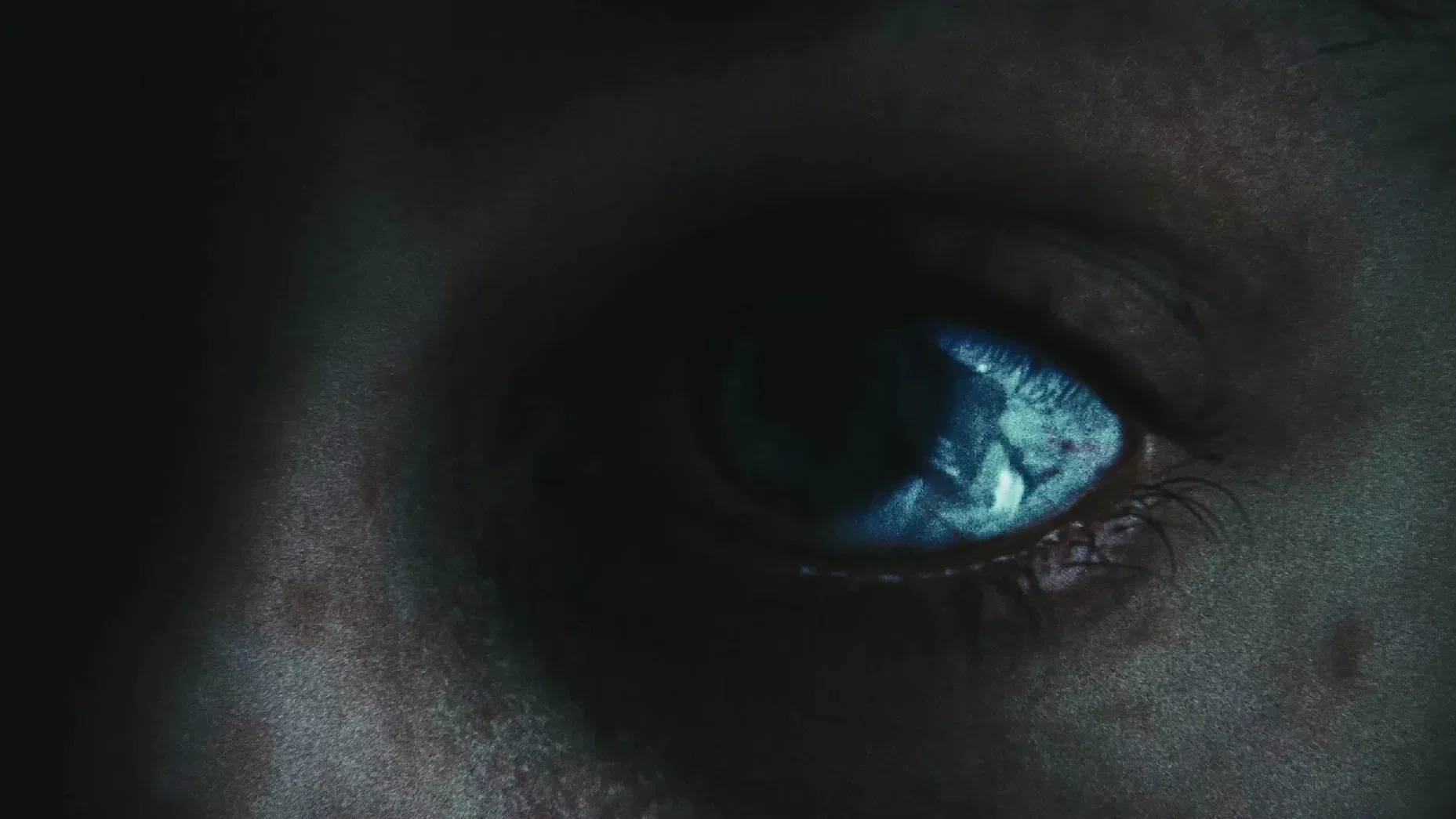
Kris sees herself from Little Death's perspective while also seeing him from the bed, fulfilling the heart of her fantasy as expressed through slasher movies: being the killer and victim at the same time. Billy coaches her, "You're almost there, you're almost dead," as Kris offers the last vestige of her shame to Little Death, pleading for her life. Billy assures her she won't leave as Little Death plunges his spear through both of them, blood now pouring from their mouths and drenching their bodies as they orgasm (this movie is not subtle).
The next morning, they wake up and start the day, the world outside no longer pretending to be real, and they arrive at the gas station where Kris started the movie. They have a moment in the candy aisle, beaming with love and desire for each other, and most importantly, still drenched in blood.
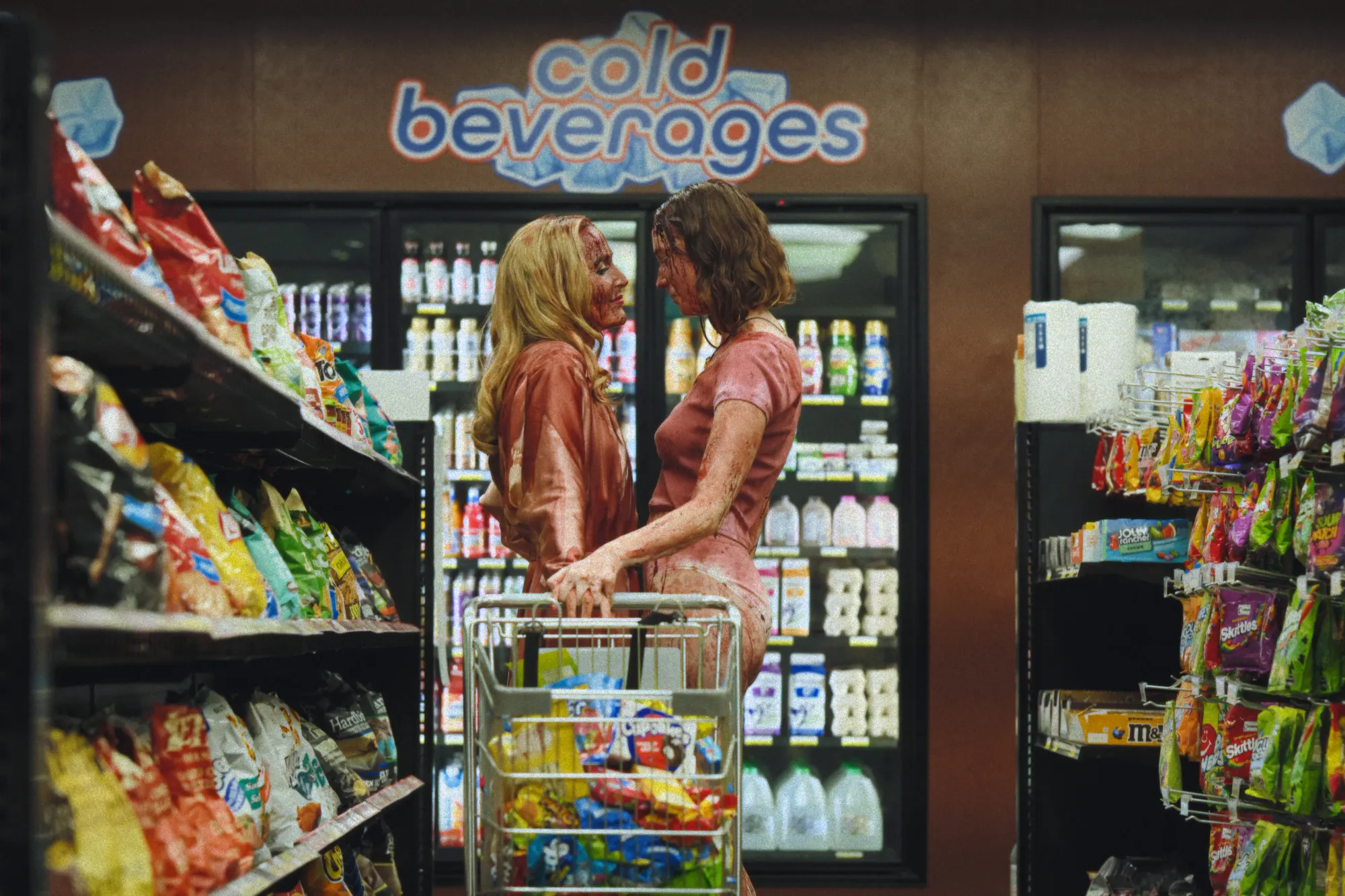
This is the image that made me tear up the rest of the night as I tried to take notes at the bar. Covered in blood and still in their nightwear, they've carried the afterglow of the night before with them out into the world. They are changed, awakened to each other and themselves, and they wear that awakening unapologetically, not as an announcement to the world, just as a redefinition of themselves.
I was a late bloomer, thanks to a Catholic upbringing that instilled a lot of shame in me growing up. I didn't address those feelings until much later in my life, and I didn't recognize it as such at the time. Still, like Kris, I would escape into the art I was creating or weave intellectual and sometimes spiritual excuses to not engage with intimacy in any form, not just sexually.
Over the years, it was easier to hide in those excuses than to admit to myself I was even capable of desire, much less expressing it. At one point in the film, Kris finds some courage and decides to seduce Billy. As they start to have sex, Billy asks what she likes. Kris replies, "Whatever you want," and as Billy gently presses her, she keeps deflecting ("Dealer's choice") until her courage vaporizes, and she returns to her shame and frustration with herself.
I have definitely been through versions of that scene in my own awakenings (you can have more than one!). Sometimes it was almost easier to deal with the shame feedback loop than to be open, because I was at least familiar with that feeling. Being vulnerable felt like my whole body was an exposed nerve, and it could be terrifying.
Eventually, therapy gave me confidence in many areas of my life, but it didn't immediately translate to my sexuality. That took longer, but the more I confronted it, the easier it became. I've even met a few people like Billy who set the bar for the kind of person I want to be, in terms of emotional self-awareness. They weren't fearless or without shame, but they were willing to step outside of themselves and realize "its all play", as Billy mentions at one point.
If it gets too real, you can always turn it off.
Sexuality and self-confidence are lifelong journeys, but I've made meaningful strides with each. That's what the final images of Kris and Billy mean to me, and what continues to resonate. Seeing them stand bravely in the world, covered in desire and blood, reminds me that despite all my anxiety and fears, I've been brave before, and as long as I keep working on myself, there's no reason I can't be again.
Projection Booth
- Billy
- Because you talk about it so academically. In "Camp Miasma," it wasn't about cultural depictions of monstrosity or gender trouble or any of that stuff. It was about two very simple things - flesh and fluids.
- Billy
- If it gets too real, you can always turn it off.
- Kris
- Sex seems so easy for so many people but I've never been able to get there with someone else unless I'm really far away in my head.
